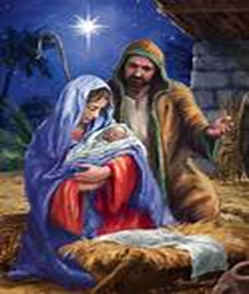
WHY DID JESUS COME TO LIVE AMONG US?
Why did God send His son to earth?
Looking at it from a very human point of view, I think that it was God’s final attempt to show humans how much He loved them…” For God so loved the world that He gave His only son…” ( John 3:16)
Our Heavenly Father knew what the outcome would be…the cross. But He also knew that the life and sacrifice of Jesus would not be in vain. He showed us how much He loves us!
Jesus taught in the Synagogue and on a Sabbath took the reading from the scroll. He read from Isaiah 61:1-2a, “The Spirit of the Lord is upon me, because He has anointed me to preach the good news to the poor. He has sent me to proclaim freedom for the prisoners and recovery of sight to the blind, to release the oppressed, to proclaim the year of the Lord’s favour.”
Jesus came to earth to bring healing, wholeness and the awesome message that we are loved by God. “For God so loved the world..” (John 3:16)
However, this message of God’s total sacrificial love is lost on a world that distorts the message of love from God by erroneous teachings that bring fear an apprehension in people’s hearts and lives. We do not KNOW that we are loved, we do not believe that we can be forgiven for all our nasty, selfish, unloving and wicked ways.
What more can God do to show us that we are loved, and that we can get rid of our guilt and shame by sincerely asking for forgiveness and endeavouring to do better?
What more can God, our Heavenly Father, do to help us know that we are loved?

MEMORY LOSS
“I can’t remember…”
7 TIPS TO IMPROVE YOUR MEMORY (Mayo Clinic)
Try these simple ways to improve your memory.
Can't find your car keys? Forget your grocery list? Can't remember the name of the personal trainer you liked at the gym? You're not alone. Everyone forgets things once in a while. Still, memory loss is nothing to take lightly.
Although there are no guarantees when it comes to preventing memory loss or dementia, some activities might help. Consider seven simple ways to sharpen your memory. And know when to get help for memory loss.
Be physically active every day
Physical activity raises blood flow to the whole body, including the brain. This might help keep your memory sharp.
For most healthy adults, the Department of Health and Human Services recommends at least 150 minutes a week of moderate aerobic activity, such as brisk walking, or 75 minutes a week of vigorous aerobic activity, such as jogging. It's best if this activity is spread throughout the week. If you don't have time for a full workout, try a few 10-minute walks throughout the day.
Stay mentally active
Just as physical activity keeps your body in shape, activities that engage your mind help keep your brain in shape. And those activities might help prevent some memory loss. Do crossword puzzles. Read. Play games. Learn to play a musical instrument. Try a new hobby. Volunteer at a local school or with a community group.
Spend time with others
Social interaction helps ward off depression and stress. Both of those can contribute to memory loss. Look for opportunities to get together with loved ones, friends and other people, especially if you live alone.
Stay organized
You're more likely to forget things if your home is cluttered or your notes are in disarray. Keep track of tasks, appointments and other events in a notebook, calendar or electronic planner. You might even repeat each entry out loud as you write it down to help keep it in your memory. Keep to-do lists up to date. Check off items you've finished. Keep your wallet, keys, glasses and other essential items in a set place in your home so they are easy to find.
Limit distractions. Don't do too many things at once. If you focus on the information that you're trying to remember, you're more likely to recall it later. It also might help to connect what you're trying to remember to a favourite song or a familiar saying or idea.
Sleep well
Not getting enough sleep has been linked to memory loss. So has restless sleep and sleep that gets disturbed often. Make getting enough healthy sleep a priority. Adults should sleep 7 to 9 hours a night on a regular basis. If snoring disrupts sleep, make an appointment to see your health care provider. Snoring could be a sign of a sleep disorder, such as sleep apnoea.
Eat a healthy diet
A healthy diet is good for your brain. Eat fruits, vegetables and whole grains. Choose low-fat protein sources, such as fish, beans and skinless poultry. What you drink also counts. Too much alcohol can lead to confusion and memory loss.
Manage chronic health problems
Follow your health care provider's advice for dealing with medical conditions, such as high blood pressure, diabetes, depression, hearing loss and obesity. The better you take care of yourself, the better your memory is likely to be. Regularly review the medicines you take with your health care provider. Some medicines can affect memory.
When to get help for memory loss
If you're worried about memory loss, make an appointment with your health care provider. If memory loss affects your ability to do your daily activities, if you notice your memory getting worse, or if a family member or friend is concerned about your memory loss, it's particularly important to get help.
At your appointment, your provider likely will do a physical exam and check your memory and problem-solving skills. Sometimes other tests may be needed too. Treatment depends on what's causing memory loss.

THE POWER OF PRAYER
Start of a new year in prayer, which is a powerful act of faith.
Prayer at the start of a new year is a powerful act of faith. It allows us to set intentions rooted in God’s promises and to seek His wisdom for the journey ahead. The act of praying is not merely a ritual; it is a declaration that we trust in God’s guidance over our plans, decisions, relationships, and endeavours. By committing our year to Him, we embrace the assurance that He will direct our paths, and provide strength in times of challenge. Prayers are a vital source of spiritual nourishment, offering clarity, peace, and renewed focus as we navigate the uncertainties of life.
In addition to guidance, the new year is an ideal moment for spiritual growth and transformation. We are encouraged to let go of past regrets, release burdens, and cultivate a heart that seeks God above all else. This is a time to strengthen our faith, deepen our relationship with Christ, and live with intention and purpose.
Starting the year with prayer also fosters gratitude and humility. Recognizing God’s sovereignty reminds us that our successes and achievements are rooted in His grace. Prayer encourages us to be mindful of His blessings, to seek forgiveness for our shortcomings, and to embrace His guidance in all circumstances. By dedicating time to prayer, we are cultivating a lifestyle that prioritizes God’s presence, which ultimately leads to peace, joy, and a sense of purpose. Furthermore, prayers for the new year help us to anticipate challenges with faith, approach decisions with wisdom, and respond to trials with patience and perseverance.
Crystal Meyer
A NEW YEAR’S PRAYER
O God our loving heavenly Father, thank You for bringing us into a brand-new year. As we stand at the threshold of new beginnings, forgive every hurt we have caused, regret, and failure of the past. Grant us to look back with penitence and gratitude, but also to look forward with hope and determination, and let our past sins teach us how utterly we need You. So entering boldly into the New Year, make us brave, serene and strong, so that even in a world so full of suffering, we may be lights shining in the darkness, helping to light the path which humanity now must tread, knowing that, in You, the best is yet to be, through Jesus Christ our Lord. AMEN

TODAYS JOKES
New Years Jokes
Youth is when you're allowed to stay up late on New Year's Eve. Middle age is when you're forced to.
An optimist stays up until midnight to see the new year in. A pessimist stays up to make sure the old year leaves.
My New Years resolution is to try to remember why I've walked into a room.
A New Year's resolution is something that goes in one year and out the other. It's about having a good year!
I have only one resolution: To rediscover the difference between wants and needs. May I have all I need and want all I have!
God, grant me the senility to forget the people I never liked anyway, the good fortune to run into the ones that I do, and the eyesight to tell the difference.
New Year Prayer
Dear God, So far this has been great! I haven't gossiped about my friends. I haven't lost my temper. I haven't been greedy, grumpy, nasty, cruel, or rude. I'm very thankful. But in a few minutes, Lord, I'm going to get out of bed, and from then on I'm probably going to need a lot more help to get through the New Year.
IF JESUS NEVER CAME
Start of a new year in prayer, which is a powerful act of faith.
At Christmas we celebrate the birth of Christ — but have we ever paused to ask, what if Jesus never came? Imagine a world without the hope, compassion and light His coming brought. No churches, no Christian hospitals or schools, no carols, no manger scenes, no spirit of generosity that shapes so much of our world today. More deeply, imagine a world still groping in the dark, unsure of who God is, uncertain about forgiveness, and with no hope beyond the grave.
Without Jesus, We Would Know Little About God
Throughout history, God left many signs of Himself — in nature, in the Scriptures, and in Israel’s story. Yet people still longed for certainty. Isaiah foretold a day when God would reveal Himself through a child called Immanuel — “God with us,” the One who would be Wonderful Counsellor, Mighty God, Everlasting Father and Prince of Peace (Isaiah 9:6–7).
Before Christ, humanity had only glimpses of God; like a scrambled picture on a screen. Without Jesus, that picture would remain blurred.
Without Jesus, Our Sins Would Not Be Forgiven
The Old Testament system could cover sin but could not remove it. Many lived carrying heavy guilt, trying to stay busy to hide their burdens. Isaiah promised a Saviour who would come to save and heal — but without Christ’s arrival, we would still be waiting.
Without Jesus, There Would Be No Assurance of Eternal Life
A world without Christ is a world without hope. People would ask, “What is life about?” and find the answer in Ecclesiastes: “Meaningless!” (Ecclesiastes 1:2). Without the resurrection and the promise of eternity, our labour and our suffering would feel empty.
BUT JESUS HAS COME.
He Revealed God to Us
“No one has ever seen God, but the one and only Son…has made Him known” (John 1:18). Jesus is God with us. As He said, “He who has seen Me has seen the Father” (John 14:9). His birth is God stepping into our world so we may know Him personally.
He Took Away Our Sin
John the Baptist declared, “Behold, the Lamb of God who takes away the sin of the world!” (John 1:29). Through Christ, guilt is removed, burdens are lifted, and forgiveness becomes a sure promise.
He Opened the Door to Eternity
Because Jesus lives, everything we do has eternal worth. “Your labour in the Lord is not in vain” (1 Corinthians 15:58). Even the ordinary becomes sacred when done for Him.
A Reason to Celebrate
The world celebrates Christmas in many ways, but Christians celebrate with deeper joy because we know why we celebrate and who the celebration is for. The birth of Jesus is so miraculous, so significant, that thousands of years later the world still pauses to remember.
He has come.
And because He has come, we can know God, receive forgiveness, and live with eternal hope.
A REFLECTION AT CHRISTMASTIME (Copy)
A heartfelt Christmas reflection asking whether our celebrations still resemble the Christ we claim to follow.
The bible says “be still and know that I am God” (Psalm 46vs10) and on the 15th December last year, in my pre-dawn meditation, this is what came to me…
My heart was heavy for a number of reasons; I look at the Christmas festivities, TV programmes etc and, sadly, our Saviour and Lord Jesus Christ, is just about absent in all the media, the TV programmes, and celebrations. “Father Christmas” has become the central figure. Forgive me for saying this, it is like a pagan festival! It is all about spending money and pleasure!
However, I honour all the churches that are a light in an ever-darkening world especially at Christmastime.
But I have this against the churches, with some exceptions, they have lost the true reflection of our Lord Jesus Christ. In spite of the incredible good that has been done, in many aspects it does not reflect the life of our Lord Jesus Christ, God incarnate, sent to be the Saviour of the world.
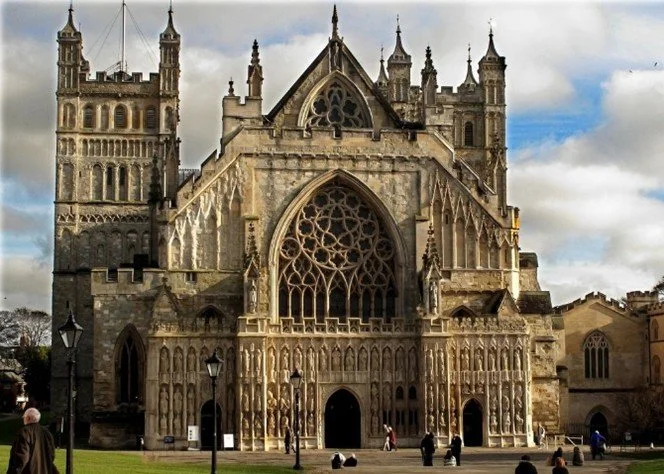
Do the splendour of the priestly robes, the magnificent lavish buildings, the decorations in gold etc. compare with the image of Jesus in His earthly ministry? I am aware that the motive behind the magnificent cathedrals and churches is to honour God, but how does this relate to the example that Jesus gave us?
Jesus was often in conflict with the “religious” institution of His day, and I wonder what He would say to us today?
I do understand that throughout history magnificent churches were built to be a glorious tribute to the greatness of God, however, these elaborate buildings and garb of the clergy, do not reflect the love and compassion of God, especially as they, the cost of them, could have saved many lives of starving and desperately ill people.
Our Saviour Jesus Christ was not an iconic figurehead, but one who ‘saw’ the pain of the people and His whole life was dedicated, not to fame, position and pompous ceremonies, but to walk the dusty roads bringing healing of body, mind and spirit to all He met. We, and I include myself, and all the various denominations, churches, do not reflect the true image of the love of God as Jesus did.
The rich young ruler asked Jesus what he needed to be saved. Jesus perceived that he was tied to his wealth and told him to sell all he had, give it to the poor, and then to become a follower…the man could not find the strength to do that. But is this not a parable for the churches today? Is it not time to cast off restricting robes and fortified church buildings, to take the shepherd’s staff and truly, personally, engage with a world that is crying out for love and care and through that ministry (not the elaborate church ceremonies) reveal the love of God the Father, Son and Holy Spirit?
I am a nobody, but I have walked this earth for 79 years and as I reflect on all that I have heard, seen and witnessed, my heart aches; I have failed to live fully as my Saviour lived, the churches across the globe have in many ways have ‘missed the mark’, in fact some of the welfare institutions have more fully reflected the work of our Lord Jesus Christ. Is it not time for all of us, and our institutions, to walk in the footsteps of Jesus?

LETTING GO..
There are things to treasure and things to let go..
There are things that are a positive influence or experience in our lives and these are good things to keep and to treasure, and we must ‘celebrate’ them. However, there are other things that are like a dark shadow that haunts us in various degrees, and at various times. For example: grieving a loss, hurt by the words or actions of someone significant, guilt that taunts us, etc.
“That is why it is so important to let certain things go. To release them, complete the circle. Not out of pride, inability or arrogance, but simply because whatever it is, it no longer fits into your life.
Close the door, change the record, clean the house, get rid of the dust, say “no more” to the accuser! (From Paulo Coelho’s book “The Zahir”)
Stop being who you were and become who you are!”
I read this phrase a long time ago “we hurt, we hate, we heal”
No human being can say that they have never been hurt.. and the range is wide; from small issues to life-damaging events. From a singular incident to months/years of torment.
What we must not, cannot, do is allow whatever happened to tarnish the rest of our existence. We may agree with this statement, but immediately the question is “great, but how do we deal with it?”
May I be so bold as to suggest a few steps-
Stop denying your pain, perhaps learn from the Psalmist who asked “Why are you downcast, O my soul? Why so disturbed within me?” and he continues to say “put your hope in God” (Psalm 42 & 43)
Many psychological issues stem from unresolved hurt, grief and emotional pain.
Have the courage to name the incidents/relationships/events, etc. that have wounded you. Not in a negative destructive way but to enter a dialogue with it; “What happened? Who did it involve? How old was I? How has it affected me? Who did I tell and what was their response?
Don’t feel you have to do this on your own, you can find a trusted person, a counsellor/psychologist etc. to walk this journey with you.
Don’t minimize the impact of what happened, acknowledge it but with the purpose of dealing with it so that you can be freed from the effect it has had on your life.
The painful things in our life can have positive results if we handle them correctly. Somewhere I read this phrase “we hurt, we hate, we heal” Basically, as I understand it, we need to be realistic about the pain it has caused us- physical, emotional and even spiritual (we can, and probably do, question why God has allowed it to happen to us). However, because our Creator has given us the gift of freedom of choice, and we often suffer from our poor choices or the actions of others. The secret is not to allow the hurt/guilt etc. to lie in our memory, or subconscious, to torment us.
It is a journey of letting go in a positive and healthy way.
PHILLIPS BROOKES
The Pastor who gave the world ‘O Little Town of Bethlehem’
The Pastor who gave the world ‘O Little Town of Bethlehem’ Phillips Brooks, one of America’s most respected 19th-century pastors, never set out to become a hymn writer. Born in Boston in 1835, he was known first for his towering height, warm personality, and extraordinary gift of preaching. People often described him as gentle yet powerful — a man whose words could move a crowded church to tears, not through theatrics, but through sincerity.
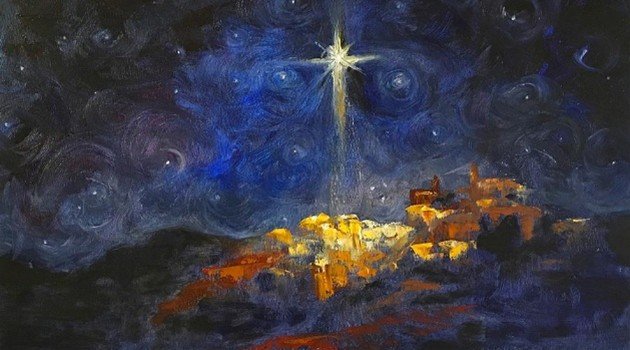
In 1865, shortly after the American Civil War, Brooks found himself exhausted in spirit. His nation was wounded, and so was he. Seeking rest and renewal, he travelled to the Holy Land. On Christmas Eve, he rode on horseback from Jerusalem to Bethlehem. As night fell, the town lay still under a quiet sky. He entered the Church of the Nativity — the traditional site of Jesus’ birth — and was deeply moved by the simple beauty of the candlelit service. There were no grand choirs, no loud celebrations, just the quiet murmur of worshippers remembering the night Christ came.
That moment stayed with him long after he returned to Boston. Three years later, in 1868, he wanted a special piece for his church’s Christmas service and found his mind returning to that peaceful night in Bethlehem. Sitting down to write, he poured the memories of that holy evening into a poem beginning with the words, “O little town of Bethlehem, how still we see thee lie.”
He handed the poem to his church’s organist, Lewis Redner, who composed a tune that came to him, fittingly, in the quiet of the night. Neither man imagined it would travel far beyond their congregation.
Yet the hymn captured something timeless — the truth that God often enters our world softly, without noise or fanfare. Through Brooks’ simple reflection, generations have been reminded that holiness is often found in the quiet places, waiting to be noticed.
Here is the Christmas Carol.
O little town of Bethlehem,
How still we see thee lie!
Above thy deep and dreamless sleep
The silent stars go by.
Yet in thy dark streets shineth
The everlasting Light;
The hopes and fears of all the years
Are met in thee tonight.
O morning stars, together
Proclaim the holy birth,
And praises sing to God the King,
And peace to men on earth;
For Christ is born of Mary,
And gathered all above,
While mortals sleep, the angels keep
Their watch of wondering love.
For Christ is born of Mary,
and gathered all above,
While mortals sleep, the angels keep
their watch of wondering love.
O morning stars together,
proclaim the holy birth,
And praises sing to God the King,
and peace to men on earth!
How silently, how silently
The wondrous gift is given!
So God imparts to human hearts
The blessings of His heaven.
No ear may hear His coming;
But in this world of sin,
Where meek souls will receive Him, still
The dear Christ enters in.
O holy Child of Bethlehem,
Descend to us, we pray;
Cast out our sin, and enter in;
Be born in us today.
We hear the Christmas angels
The great glad tidings tell;
O come to us, abide with us,
Our Lord Immanuel!

THE VALUE OF JOURNAL KEEPING
Not a diary, a record of our inner journey.
1. EXPLANATION:
A journal is not a diary of events; it is rather a record of our deeper inward journey by recording “sacred” encounters, revelations, and insights that we have found and experienced. It is a private record of these precious moments.
2. SOME GUIDELINES:
Choose a book that will last, something worthy of the treasure it will hold
Be creative, it is your own private book.
3. SOME SUGGESTIONS FOR THINGS TO RECORD:
The high moments, and the low moments, of your life.
The events that have been significant e.g. family gatherings
Record your questions about life, struggles, guidance etc.
Memories that surface.
Questions and answers.
Issues that need attention.
Feelings that surface, don’t suppress them, let them be a source of joy and a means of healing.
Add pictures, drawings etc.
Record “God-incidences” that have been meaningful to you. “Mary treasured up all these things and pondered them in her heart” Luke 2:19
Record answers that have come to you.
List the people who are significant to you. And give thanks for them.
TODAYS JOKES
Some Christmas humour
Q: Why was the snowman looking through the carrots? A: He was picking his nose!
Q: What happens if you eat too many Christmas decorations? A: You get tinsel-itis.
Q: What do you get when you cross a snowman and a vampire? A: Frost-bite!
Q: What do elves learn in school? A: The elf-abet.
Q: Why didn't the wise men stop to water their camels? A: No well.
A boy opened a Christmas present and found batteries with a note: “Toy not included.”
Two snowmen are standing in a field. One says, “Do you smell carrots?”

IF I KNEW..
We do not know when it is the last time…
If I knew it would be the last time, that I’d see you fall asleep,
I would tuck you in more tightly, and pray the Lord, your soul to keep.
*******
If I knew it would be the last time, that I see you walk out the door,
I would give you a hug and kiss, and call you back for one more.
*******
If I knew it would be the last time, I’d hear your voice lifted in praise,
I would video tape each action and word, so I could play them back day after day.
*******
For surely there’s always tomorrow to make up for an oversight,
and we always get a second chance to make everything right.
*******
There will always be another day to say our “I love you,
And certainly there’s another chance to say our “Anything I can do?”
*******
But just in case I might be wrong, and today is all I get, I’d like to say how much I love you and I hope we never forget, tomorrow is not promised to anyone, young and old alike,
And today may be the last chance you get to hold your loved ones tight.
*******
So if you’re waiting for tomorrow, why not do it today?
For if tomorrow never comes, you’ll surely regret the day,
That you didn’t take that extra time for a smile, a hug, or a kiss
And you were too busy to grant someone, what turned out to be their last wish.
*******
So hold your loved ones close today, and whisper in their ear,
That you love them very much and you’ll always hold them dear.
*******
Take time to say, “I’m sorry,” “Please forgive me,” “thank you,” or ‘it’s okay”.
And if tomorrow never comes, you’ll have no regrets about today.
Author unknown

WORKING WELL WITH RELATIONSHIPS
We are not isolated human beings…
We do not exist in a vacuum; from the day that we are born we are in relationships... our mother, father, siblings, spouses, friends, co-workers etc… The reality is that our relationships can be a blessing or a challenge, or a bit of both!
If we are realistic, we will realise that we are all human with the flaws that go with that. However, the good news is that we are not helpless pawns in a game but have the freedom of choice.
The first relationship to analyse is the relationship we have with ourselves.
It can be positive or negative or vacillate between the two. The prophet Isaiah wrote this “Woe to me! ..for I am a man of unclean lips….” (Isaiah 6:5). Take some time to consider the following personal assessment…..
What do I feel about myself?
What personality do I have? Introvert/extrovert, intuitive/sensing, thinking/feeling, judging/perceiving? Have I accepted/embraced my unique personality?
Am I struggling with expectations from others? Whose expectations?
Am I struggling with my own expectations? What is driving me?
Am I struggling with my perception of what God’s expectation of me is?
Do I feel that my life is significant? Apart from the financial necessity, our work gives us a sense of having a meaningful place in this world, however it is not the only place where we find significance…
What actually drains the life out of me?
The second is to analyse is our relationships with others.
Am I an Introvert? (a shy inwardly thoughtful person) or an Extrovert? (an outgoing or sociable person)
Am I struggling with expectations from others? Who? Name them for yourself. Whose voice is dictating in your head?
How healthy are my relationships?
Am I struggling with what I feel is God’s expectations of me?
I love the old song… ”getting to know you, getting to like you, hope you like me!”
Know ourselves, like ourselves!
Know others, getting to like others!
Know you are loved by God! “For God so loved the world..” (John 3:16)

AN INSIGHTFUL POET
All the world is a stage..
Shakespeare's comedy “As You Like It”, about love and folly in the Forest of Arden…
All the world’s a stage,
And all the men and women merely players;
They have their exits and entrances
And one man in his time plays many parts,
His acts being seven ages.
At first the infant, muling and puking in the nurses arms..
Then the whining school-boy, with his satchel,
And shining morning face.
Creeping like a snail
Unwillingly to school.
And then the lover,
Sighing like a furnace, with woeful ballard
Made to his mistress’ eyebrow.
Then a soldier
Full of strange oaths and bearded like a bard,
Jealous in honour, sudden and quick in quarrel,
Seeking the bubble reputation
Even in the canon’s mouth.
And then the justice.
In fair round belly, with good capon lin’d,
With eyes severe and beard of formal cut,
Full of wise saws and modern instance;
And so he plays his part.
The sixth age shifts
Into the lean and slippered pantaloon,
With spectacles on nose, and pouch on side;
His youthful hose, well sav’d a world too wide
For his shrunk shank, and his big manly voice,
Turn again towards childish treble, pipes
And whistles in his sound.
Last scene of all,
That ends this strange eventful history,
In second childishness and mere oblivion,
Sans teeth, sans eyes, sans taste, sans
Everything.

BECOMING MORE POSITIVE
We do have the ability to become a more positive person!
Promise yourself to be so strong that nothing can disturb your peace of mind. To talk health, happiness, and prosperity to every person you meet.
To make all your friends know that there is something to them.
To look at the sunny side of everything and make your optimism come true.
To think only of the best, to work only for the best and expect only the best.
To be just as enthusiastic about the success of others as you are about your own.
To forget the mistakes of the past and press on to the greater achievements of the future.
To wear a cheerful countenance at all times and give every living creature you meet a smile.
To give so much time to the improvement of yourself that you have no time to criticize others. To be too large for worry, too noble for anger, too strong for fear and too happy to permit the presence of trouble.
(Christian D. Larson)
LISTENING AS A SACRED ART
“True listening begins in silence, deepens through reflection, and blossoms in presence—where hearts meet beyond words.”
If one gives answer before hearing, it is folly and shame.(Proverbs 18:13)
Over the years I have discovered that there is a basic context that nurtures and develops the practice of listening as a sacred art. Three qualities that are essential to this deep listening context are silence, reflection, and presence.
Silence creates the space for listening to God. It provides time to explore our relationship to Source. The practice of being in this silence nurtures our capacity to listen to others.
Reflection gives us access to listening for our inner voice. The practice of taking a few breaths before responding to a situation, question, or comment gives time for your true wisdom to reveal itself. It’s a slowing down, waiting, practicing patience.
Presence is the awareness of listening to another, of connecting at the heart level. The practice of taking a mundane, ordinary activity and giving it your full attention, for example, washing your hands or brushing your teeth, trains your concentration and your ability to be in the present moment with another…
Heart communication happens when we slow down, when we quiet down, look, and listen. Stop to take a breath. Become fully present with the person we’re with. Listen with all of our being. At this point, communication can occur without words. Being present is a gift that fills our hearts and spirits. We are in communion.
[Kay Lindahl, The Sacred Art of Listening: Forty Reflections for Cultivating a Spiritual Practice 2002]
TODAYS JOKES
Humorous look at the Doctor, Doctor one liners..
Doctor, doctor, I keep thinking I’m a Bell.
Well, just go home and if the feeling persists, give me a ring
Dr. Dr. People tell me I’m a wheelbarrow.
Don’t let people push you around
Dr. Dr. I’ve only got 59 seconds to live. .
Wait a minute, please
Dr. Dr. I keep thinking I’m invisible.
Who said that?!
Dr. Dr. I feel like a pack of cards.
I’ll deal with you later.
Dr. Dr. I’m manic depressive.
Calm down. Cheer up. Calm down. Cheer up. Calm. …..
Dr. Dr. I think I’m a bridge.
What’s come over you?
Oh, two cars, a large truck and a coach.
Dr, Dr, I think I’m a cat.
How long has this been going on?
Oh, since I was a kitten.
Dr. Dr. I keep thinking I’m a dog.
Lie down on the couch and I’ll examine you.
I can’t, I’m not allowed on the furniture.

INCLUDE ME OUT
Do we really care about others?
This quote, "Include me out," is a concise way of expressing one's intentional exclusion or desire to not participate in a certain activity or situation. It implies a choice to distance oneself from or avoid being involved in something. By using this phrase, the speaker asserts their decision to opt out and not be included, emphasizing their preference to stay away from or be excluded from a specific matter. (Samuel Goldwyn)
Rev Colin Morris was born in Bolton Lancashire in 1929. He was a minister of the Methodist Church and was sent to Zambia, then known as Northern Rhodesia, in 1956.
The event that inspired his writing of this book “INCLUDE ME OUT” (he wrote it in one weekend), was that a Zambia man had dropped dead not a hundred yards from his front door. In his stomach they found a few leaves and what appeared to be a ball of grass.
He says, “It is pointless turning up the figures of the Methodist relief Fund or Christian Aid. He died without knowing that Jesus cared for him, not in a sentimental, spiritual way, but by the offer of a square meal. It just so happened that none of Jesus’ men were around to give it to him, so he died and Jesus died with him.” (page 51)
Colin Morris turns his anger onto the church, and himself as a minister of the church, largely because they had spent so much time debating trivia regarding unity, and hours of discussion of what was the acceptable way to dispose of the left-over elements from Communion, and did not spend sufficient time reaching out to the “little people” that Jesus loved and who needed the church desperately.
He said, “There are things happening in God’s world which are such an affront to His righteousness that we cannot always contain ourselves and so explode in frustration.” Pg8
‘INCLUDE ME OUT’ by Colin Morris 1975
My question is “What am I, what are we, what are the churches doing for those that are truly suffering in our world?”

FIND PEOPLE WHO BELIEVE IN YOU
We all need people who are a positive influence
Mark Twain said, ‘Keep away from people who try to belittle your ambitions. Small people always do that, but the really great make you feel that you, too, can become great.’
Why does the bible say, ’Carry each other’s burdens?’ Because one person can only carry a burden so far on their own.
American novelist John Kennedy Toole quickly discovered that. As a young writer he worked alone writing a novel in New Orleans. When it was finished, he sent it to publisher after publisher, but they all turned him down. Overcome by rejection, he took his own life. Sometime after the funeral, his mother found a coffee-stained manuscript in the attic and took it to a professor at Louisiana State University who agreed to read it. Immediately he recognised its genius and recommended it to a major publisher. After its release, John Kennedy Toole’s novel, A Confederacy of Dunces, won a Pulitzer Prize and was heralded as one of the major novels of the twentieth century.
If only he had surrounded himself with friends who knew how to share his burden, encourage him when he faced rejection, and motivate him to keep going, his life would have turned out differently.
So, the word for you today is ‘Find people who believe in you’. Encourage and support them and welcome their support in return. Spend more time with those who sharpen you and make you better, and less time with those who drain your energy, time and talent. The truth is friends who speak encouragement into your life are priceless. Their words are ’Like apples of gold in settings of silver’ (Proverbs 25:11 NIV)

WRESTLING WITH GOD
Wise words from Nikos Kazantzakis (nominated for Nobel prize in literature 9 times, wrote books and plays – well-known one: “Zorba the Greek”)
In his memoir, Report to Greco, Nikos Kazantzakis shares this story: As a young man, he spent a summer in a monastery during which he had a series of conversations with an old monk. One day he asked the old monk: “Father, do you still do battle with the devil?” The old monk replied: “No, I used to, when I was younger, but now I have grown old and tired and the devil has grown old and tired with me. I leave him alone and he leaves me alone.” “So your life is easy then?” remarked Kazantzakis. “Oh no,” replied the monk, “it’s much worse, now I wrestle with God!”
There’s a lot contained in that remark – “I wrestle with God.” Among other things, it suggests that the struggles in later life can be very different than what we struggle with earlier on. In the normal pattern of things, we spend the first-half of our lives struggling with sensuality, greed, and sexuality, and spend the last half of our lives struggling with anger and forgiveness – and that anger is often, however unconsciously, focused on God. In the end, our real struggle is with God.
But wrestling with God has another aspect. It invites us to a certain kind of prayer. Prayer isn’t meant to be a simple acquiescence to God’s will. It’s meant to be an acquiescence, yes, but a mature acquiescence, come to at the end of a long struggle.
We see this in the prayer of the great figures in scripture: Abraham, Moses, Jesus, the apostles. Abraham argues with God and initially talks him out of destroying Sodom; Moses at first resists his call, protesting that his brother is better suited for the job; the apostles excuse themselves for a long time before finally putting their lives on the line; and Jesus gives himself over in the Garden of Gethsemane only after first begging his Father for a reprieve. As Rabbi Heschel puts it, from Abraham through Jesus we see how the great figures of our faith are not in the habit of easily saying: “Thy will be done!” but often, for a while at least, counter God’s invitation with: “Thy will be changed!”
Struggling with God’s will and offering resistance to what it calls us to can be a bad thing, but it can also be a mature form of prayer. The Book of Genesis describes an incident where Jacob wrestled with a spirit for a whole night and in the morning that spirit turned out to be God. What a perfect icon for prayer! A human being and God, wrestling in the dust of this earth! Doesn’t that accurately describe the human struggle?
We would do well to integrate this, the concept of wrestling with God, into our understanding of faith and prayer. We honor neither ourselves nor the scriptures when we make things too simple. Human will doesn’t bend easily, nor should it, and the heart has complexities that need to be respected, even as we try to rein in its more possessive longings. God, who built us, understands this and is up to the task of wrestling with us and our resistance.
The classical mystics speak of something they call “being bold with God”. This “boldness”, they suggest, comes not at the beginning of the spiritual journey, but more towards the end of it, when, after a long period of fidelity, we are intimate enough with God to precisely be “bold”, as friends who have known each other for a long time have a right to be. That’s a valuable insight: After you have been friends with someone for a long time, you can be comfortable with expressing your needs to him or her and in the context of a long, sustained relationship unquestioning reverence is not necessarily a sign of mature intimacy. Old friends, precisely because they know and trust each other, can risk a boldness in their friendship that younger, less mature, friendship cannot.
That is also true in our relationship with God. God expects that, at some point, we will kick against his will and offer some resistance. But we should lay out our hearts in honesty. Jesus did.
God expects some resistance. As Nikos Kazantzakis puts it:
The struggle between God and humans breaks out in everyone, together with the longing for reconciliation. Most often this struggle is unconscious and short-lived. A weak soul does not have the endurance to resist the flesh for very long. It grows heavy, becomes flesh itself, and the contest ends. But among responsible persons who keep their eyes riveted day and night upon the supreme duty, the conflict between flesh and spirit breaks out mercilessly and may last until death. The stronger the soul and the flesh, the more fruitful the struggle and the richer the final harmony. The spirit wants to have to wrestle with flesh which is strong and full of resistance. It is a carnivorous bird which is incessantly hungry; it eats flesh and, by assimilating it, makes it disappear.

ASSESSMENT OF COUPLE RELATIONSHIP
A marital health checkup
Every marriage relationship has a combination of strengths and growth points, and the key is to be able to identify them, and constructively work with them. We need to celebrate the strengths and develop the growth points.
Please fill in the questionnaire individually without discussion at this point.
Identify which you feel are strengths and which are growth areas, in your relationship. When you have identified these, select three strengths and three growth points, that are most important to you (be aware that your partner may have different ones)
a. Communication
Able to speak about issues and feelings. - Strength / Growth Point
b. Conflict resolution
Able to talk about problems and find solutions. - Strength / Growth Point
c. Financial matters.
Able to agree on budget and financial matters. - Strength / Growth Point
d. Personality and behaviour patterns
Able to accept differences and appreciate them. - Strength / Growth Point
e. Affection and sexuality
Able to be affectionate and able to discuss sexual issues. - Strengths/ Growth Point
f. Leisure activities
Able to have a good balance of activities together and apart. - Strength / Growth Point
g. Family and Friends
We are happy with our interaction with friends and family. - Strength / Growth Point
h. Decision making and responsibility roles
We are able to discuss issues and share responsibilities. - Strength / Growth Point
i. Spiritual beliefs
We are able to respect each other’s beliefs. - Strength / Growth Point
j. Children and parenting
We agree on issues relating to having and raising children. - Strength / Growth Point
After both have completed the questionnaire, set a time where both agree is conducive and comfortable to explore each other’s responses. (avoid times that are stressed)
Take turns in sharing what each perceived as your relationship strengths. Take turns in sharing one strength at a time until you each have explored three. Delight in these strengths.
In the same way share and discuss the growth areas. Avoid blaming, accusing or any negative approach. Try to understand the thoughts and feelings of each other.
Finally have a discussion around these questions:
Did any of your partner’s responses surprise you?
Which areas did mostly agree with each other?
Which areas did you struggle to understand or agree with each other?
Which area do both agree needs immediate attention?
Set a date for progress assessment Note: at all times be gentle with each other as it takes courage to express deep feelings.
After both have completed the questionnaire, set a time where both agree is conducive and comfortable to explore each other’s responses. (avoid times that are stressed)
Take turns in sharing what each perceived as your relationship strengths. Take turns in sharing one strength at a time until you each have explored three. Delight in these strengths.
In the same way share and discuss the growth areas. Avoid blaming, accusing or any negative approach. Try to understand the thoughts and feelings of each other.
Finally have a discussion around these questions:
Did any of your partner’s responses surprise you?
Which areas did mostly agree with each other?
Which areas did you struggle to understand or agree with each other?
Which area do both agree needs immediate attention?
Set a date for progress assessment
Note: at all times be gentle with each other as it takes courage to express deep feelings.